The Garden Axis: What a Straight View Does to a Walk
See how a straight garden axis changes the feel of a walk, clarifies its destination, and helps you decide when to keep the view direct or let it turn.
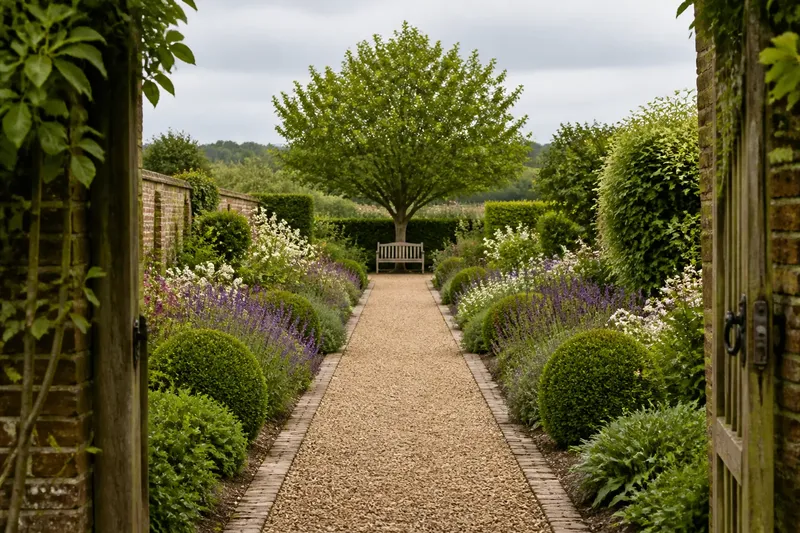
A straight garden axis makes a walk feel more deliberate by showing the destination before you reach it. Stand at the entrance and look down the path: a doorway, a tree, a bench, or a bright patch of planting can draw the eye forward and give the route a clear direction. That advance view changes the walk from a sequence of discoveries into a more direct approach.
The effect can be welcoming, ceremonial, or even a little forceful. A path aligned with a focal point tells visitors where to look and where the route seems to lead; an offset target or a turn invites them to notice the garden gradually. The line need not be paved or marked. A gap between borders, repeated plants, or the alignment of several objects can create the same visual pull.
A straight garden axis makes the destination part of the approach
With a direct view, the destination is visible from the start, so the walk gains a sense of purpose before the visitor takes a step. A bench at the end can suggest arrival and rest. A tree can make the path feel settled, while a bright container or opening in a hedge can act as a modest visual marker.
That clarity comes with a tradeoff: the eye travels quickly to the endpoint, leaving less to discover along the way. A long, uninterrupted view can make a small garden feel ordered, but it can also make a relaxed space feel like a corridor. The path’s edges, planting texture, and side routes help keep the approach interesting without weakening its direction.
If the straight view feels too commanding, keep the path and shift the focal point slightly off-center.
A straight view can make small differences more noticeable
Alignment draws attention to relationships. A centered path and centered focal point can feel calm and formal; a path aimed at an off-center object can look intentional if the surrounding planting balances the composition. But if the paving, border edges, and destination seem to point in different directions, the view may feel unsettled rather than surprising.
Say you have a narrow entry path that ends at a small flowering tree just to the right of center. If you keep the path straight, trim a low branch that blocks the tree, and leave the opposite border visually open, the tree remains the destination while the asymmetry feels deliberate. The expected result is a clear approach with a less formal finish than a perfectly centered composition.
Use the view from the entrance to judge the alignment, not only the layout from above.
A turning route trades early clarity for gradual discovery
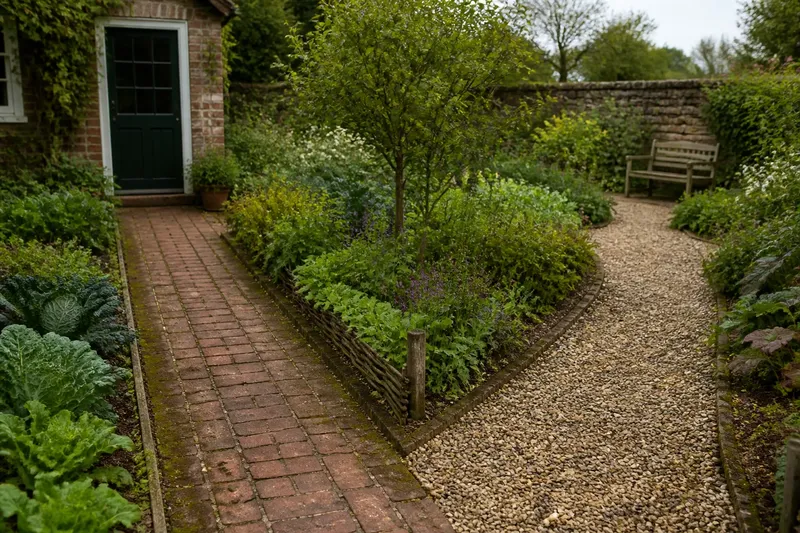
A bend hides part of the route and changes what the visitor sees at each point. That can make a garden feel more exploratory, especially where a wall, mature shrub, or established bed already blocks the far view. Give the turn a useful near focal point, then allow the next section to reveal another part of the garden.
Imagine a narrow side garden where the path turns around a shed. Place a tall pot at the inside of the bend, keep the opening beside it clear, and leave the planting beyond the turn visible through that gap. The pot marks the change of direction; the glimpse ahead encourages the walk to continue without showing the entire route from the entrance.
A turn should guide visitors around an obstacle, not make them guess where to go.
A loose alignment keeps a walk open to wandering
Not every garden needs a commanding centerline. On an open lawn, in a meadow-like border, or around a relaxed courtyard, a loose sightline can orient visitors without dictating every footfall. A gap in the planting might align with a tree, while stepping stones suggest a direction but leave room to move toward a seat or sunny border.
This approach suits places with several appealing destinations. Choose one view to anchor the entrance, then keep secondary routes legible. If the main focal point already reads clearly, adding an arch, repeated markers, and matching borders may clutter the scene instead of improving it.
Check what the path already shows before changing it
Inspect the view from the places where people enter, pause, and sit. Make one adjustment at a time, then look again from those same positions.
- At the gate, note the first object that catches your eye. If it is the intended destination, keep the view; if it is a distracting bin or bare wall, screen or relocate that object rather than adding another focal point.
- Walking the route, notice where you naturally slow or turn. If the pause happens at a useful view, preserve that opening; if it happens at a confusing junction, clarify the route with a visible path edge or planting gap.
- Look through existing branches and borders. If a gap already frames the destination, retain it; if foliage blocks the view, consider selective pruning before removing a plant or building a new frame.
- From a bench or terrace, check whether the focal point is visible while seated. If it is, let the view support the sitting area; if it is hidden, shift a container or adjust the planting rather than assuming the path needs to move.
- Approach from the entrance and check whether the endpoint stays visible. If it does, a direct axis may suit the route; if it disappears at a natural bend, use the turn to present a second view instead of forcing a straight line.
- Consider whether the focal object fits the garden’s character. If it belongs, let it anchor the composition; if it feels out of place, choose a more fitting target, such as a tree, bench, or opening in the planting.
Prefer the smallest change that makes the walk easier to read. Moving a pot or trimming a distracting low branch may be enough; changing the path itself is a larger design decision.
Match the focal point to the view and the season
A focal point needs a clear shape from the place where the axis begins. Close by, a textured container or a cluster of leaves may hold attention; farther away, a distinct tree silhouette, gate, or structure is easier to recognize. Consider how the view changes as flowers fade: an evergreen form, branch pattern, or garden structure can keep the endpoint legible through changing seasons.
The object also sets the mood of the approach. A centered seat suggests arrival, while a bright gap beyond a hedge hints at what lies ahead. The effect depends less on grandeur than on visibility, spacing, and the relationship between the path and its endpoint.
How does a straight garden view change the walk?
Does every garden path need a focal point?
No. A focal point helps when visitors need orientation or when the route should end with a clear sense of arrival. A familiar loop or richly planted space can feel more natural without one dominant target.
Can a garden axis follow a curved path?
Yes. The axis can connect a sequence of views rather than trace one straight line. Let each bend offer a distinct glimpse, and make the route itself clear enough that the curve does not feel accidental.
What can serve as a garden focal point?
A tree, gate, bench, sculpture, container, or opening in the planting can anchor a view. Choose an object with a clear shape from the approach and a role that suits the garden.
How can I tell if the straight view feels too formal?
If the centered path makes a relaxed garden feel like a procession, soften the alignment with an offset target or a secondary route. If visitors can still read the entrance and find their way, the composition can loosen without losing direction.
Let the walk set the strength of the axis
A straight garden axis makes the destination visible early and gives the approach a more purposeful rhythm. A turning view delays that certainty and rewards movement with gradual reveals; a loose alignment offers direction without closing off other choices. Start from the entrance, notice what the path already frames, and make only the changes needed to create the experience you want.
Before settling on a garden axis, revisit the approach in different light. A focal point that reads clearly in bright conditions may become indistinct at dusk, when contrast and silhouette matter more.